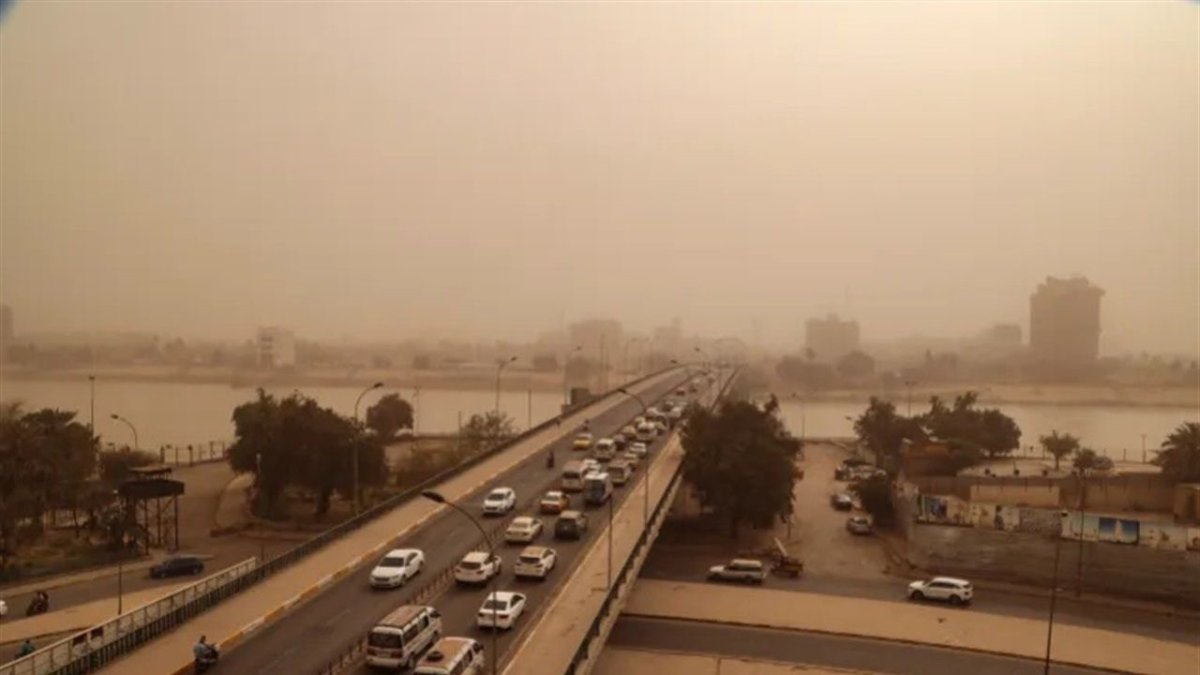
The Ministry of Environment has begun implementing an integrated national project to rehabilitate and expand the network of air monitoring stations in Baghdad. This will contribute to enhancing environmental monitoring capabilities and developing policies to protect citizens' health.
Sinan Jaafar Mohammed, Director of the Environmental Protection and Improvement Department in the Central Region, said, "The Ministry has launched the first phase of the National Ambient Air Monitoring Center project, which includes the rehabilitation of four standard air quality monitoring stations, as well as the addition of 20 new backup stations distributed across Baghdad's neighborhoods. This step aims to modernize the environmental monitoring system and develop the country's air quality monitoring infrastructure."
He added, "The first phase of the project was funded by the Central Bank, along with a contribution from the Ministry's Environmental Protection and Improvement Fund." He explained that "the Ministry relies on national expertise and the involvement of the local private sector in its implementation, with the support of German experts to ensure the application of the highest international standards in planning and implementation."
Mohammed pointed out that "a technical meeting was recently held, chaired by the Ministry's Technical Undersecretary and Technical Advisor, and attended by a group of German experts. The meeting was devoted to developing a work plan and identifying the required advice. A workshop was also held for local staff to familiarize themselves with the station distribution plan and the international approach to maintenance, calibration, and data transfer operations in accordance with European Union standards."
He noted that "the field team visited Bismayah City to determine the location for installing one of the stations, given that it contains a large population center exposed to air pollution. The visits also included a residential complex west of the capital to select the location for another station." He emphasized that "meetings and field visits are continuing to ensure the optimal implementation of the plan."
He explained that "the distribution of these stations aims to monitor air quality in residential areas and neighborhoods within the capital, providing accurate data that serves as the basis for environmental monitoring work and an important source for formulating future policies that the Ministry seeks to implement."
The Environment Ministry installs 20 modern stations to monitor air pollution in Baghdad.