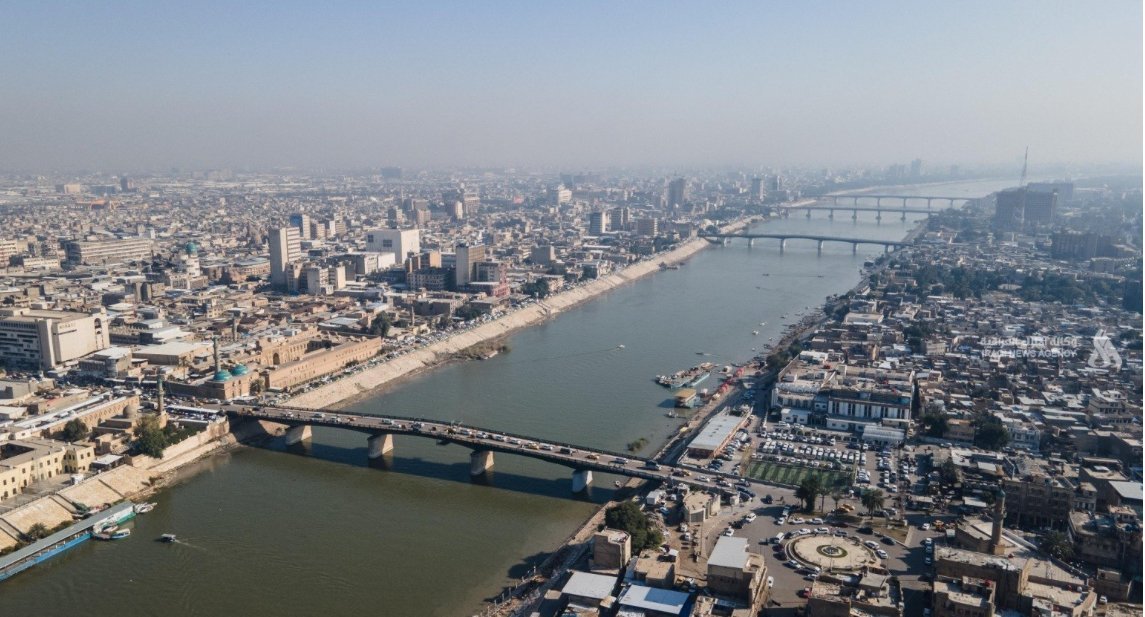
The Prime Minister's Advisor for Water Affairs, Turhan al-Mufti, confirmed that Iraq faces complex water challenges stemming from external factors related to climate change and internal factors related to encroachments on rivers. He noted that the government, for the first time, used economic leverage in water negotiations with neighboring countries to secure Iraq's water rights. He also anticipated that Turkish Foreign Minister Hakan Fidan's visit to Baghdad would result in an agreement to release up to one billion cubic meters of water.
Al-Mufti stated that "the external causes of the water crisis are the significant impacts of climate change, which are not limited to Iraq but affect the entire world, with the Middle East being among the most affected regions." He explained that "Iraq is ranked among the 15 countries most affected by climate change, which has led to a northward shift of approximately 100 kilometers and a decrease in rainfall rates in the Tigris and Euphrates basins by up to 60%."
He added, "The scarcity of rainfall in upstream countries is pushing towards what is called 'sharing the damage,' as both Turkey and Iran rely on a share of the river water within their territories before releasing the remainder to Iraq, thus exacerbating the impact of the scarcity on the country."
Regarding domestic affairs, the Mufti explained that "encroachments on rivers are a contributing factor to the crisis, through the proliferation of illegal pumps and reservoirs, and agriculture outside the plans set by the Ministries of Agriculture and Water Resources." He emphasized that "these encroachments significantly contribute to the depletion of water resources, and while work is underway to address them, the matter requires more decisive measures."
The Mufti pointed out that "for the first time since its establishment, Iraq is utilizing its economic tools in the water negotiations with neighboring countries," noting that "previous agreements, including the 1946 Good Neighborliness Agreement with Turkey and the Algiers Agreement with Iran, did not contain clear provisions regarding water quotas."
Government advisor: Agreement expected during Turkish Foreign Minister's visit tomorrow regarding water flows