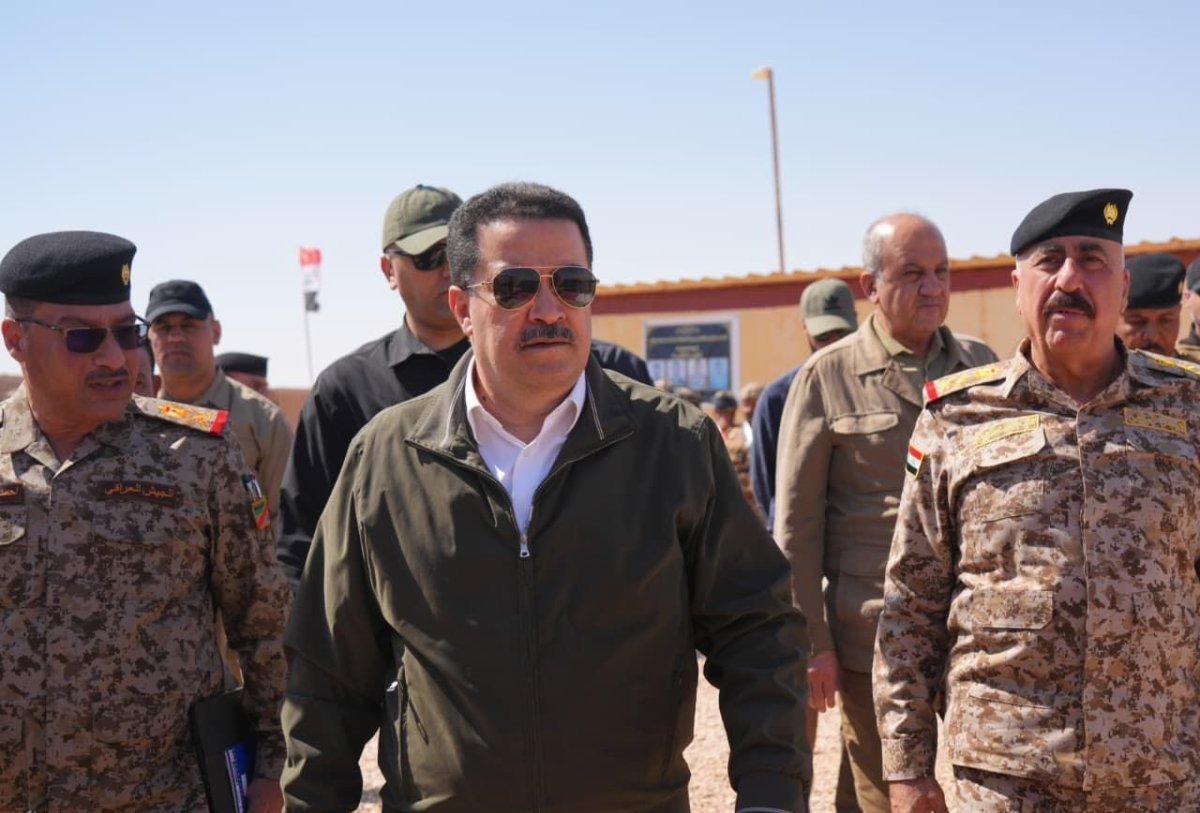
The spokesman for the Commander-in-Chief of the Armed Forces, Sabah al-Numan, confirmed that the visit of Prime Minister and Commander-in-Chief of the Armed Forces, Mohammed Shia al-Sudani, to Wadi Hauran and the Anbar Desert carries important messages on both the security and economic levels.
Numan said, "The Commander-in-Chief of the Armed Forces is making great efforts in various fields, foremost among them the security field, as well as urban projects and building close relations with neighboring countries." He explained that "his presence on the ground today among the fighters in Wadi Hauran reflects his closeness to his sons in the security forces and his keenness to follow up on their needs and requests."
He added, "This region, which was previously described as a haven for terrorist gangs, is now under the full control of the security forces thanks to their sacrifices. The Commander-in-Chief's visit reflects his awareness of its strategic importance to Iraq's stability." He noted that "the visit also included an overview of the situation of oil companies in the Akkas field." Al-Numan explained, "The main messages of this visit are that security, investment, and the economy are interconnected elements that cannot be achieved without each other. He added that the distinguished security presence in the Anbar Desert today is a reassuring message to the people that this region, which was a hotbed of terrorism, has become safe thanks to our heroic forces and the General Command of the Armed Forces."
Prime Minister and Commander-in-Chief of the Armed Forces, Mohammed Shia al-Sudani, emphasized on Monday the strategic importance of the Hawran Valley and the Anbar Desert to the country's security and stability.
The Prime Minister's Media Office said in a statement, "Prime Minister and Commander-in-Chief of the Armed Forces, Mohammed Shia al-Sudani, conducted a field visit to the Hawran Valley and the Anbar Desert as part of the Anbar and Al-Jazeera Operations Commands. He was accompanied by the Minister of Defense, the Chief of Staff of the Army, the Deputy Commander of Joint Operations, the Commander of the Land Forces, the Commander of Anbar Operations, the Director of Military Intelligence, and the Military Advisor to the Prime Minister."
The statement added, "Al-Sudani inspected the units holding the positions, both on the ground and in the air, in the areas of Wadi Houran, Al-Sakkar, Al-Husayniyat, Al-Hazimi, Al-Kara, and Akkaz, and listened to a detailed explanation from the commanders about the ongoing work to build the defensive line in Wadi Houran and the military bases during the current government's tenure."
The statement indicated that "the visit included an inspection of some hills and fortified points in the sectors of the Fifth and Seventh Army Divisions, including the headquarters of the 20th Brigade of the Fifth Division in the Anbar Operations Command in the Al-Sakkar and Hazimi areas, and the border point separating the Anbar Operations Command and Al-Jazeera at the entrance to Wadi Houran, which falls under the responsibility of the Second Regiment of the 78th Brigade of the Seventh Division."
The statement continued, "The Commander-in-Chief of the Armed Forces met with the soldiers in the defensive line areas and reviewed their conditions." He stressed "the need to provide all their requirements to enable them to perform their duties to the fullest extent, emphasizing the importance of this strategic region for the country's security and stability, as well as its significant economic importance."
The statement concluded, "The Prime Minister's tour included an aerial inspection of the work of the oil companies responsible for oil and gas production in the Akkas field, which represents one of the most promising natural gas fields."
Al-Numan: The Commander-in-Chief's visit to Wadi Hauran carries security and economic messages.